ABOUT JEN
About Jen
I believe therapy can be a place where we become more fully ourselves.
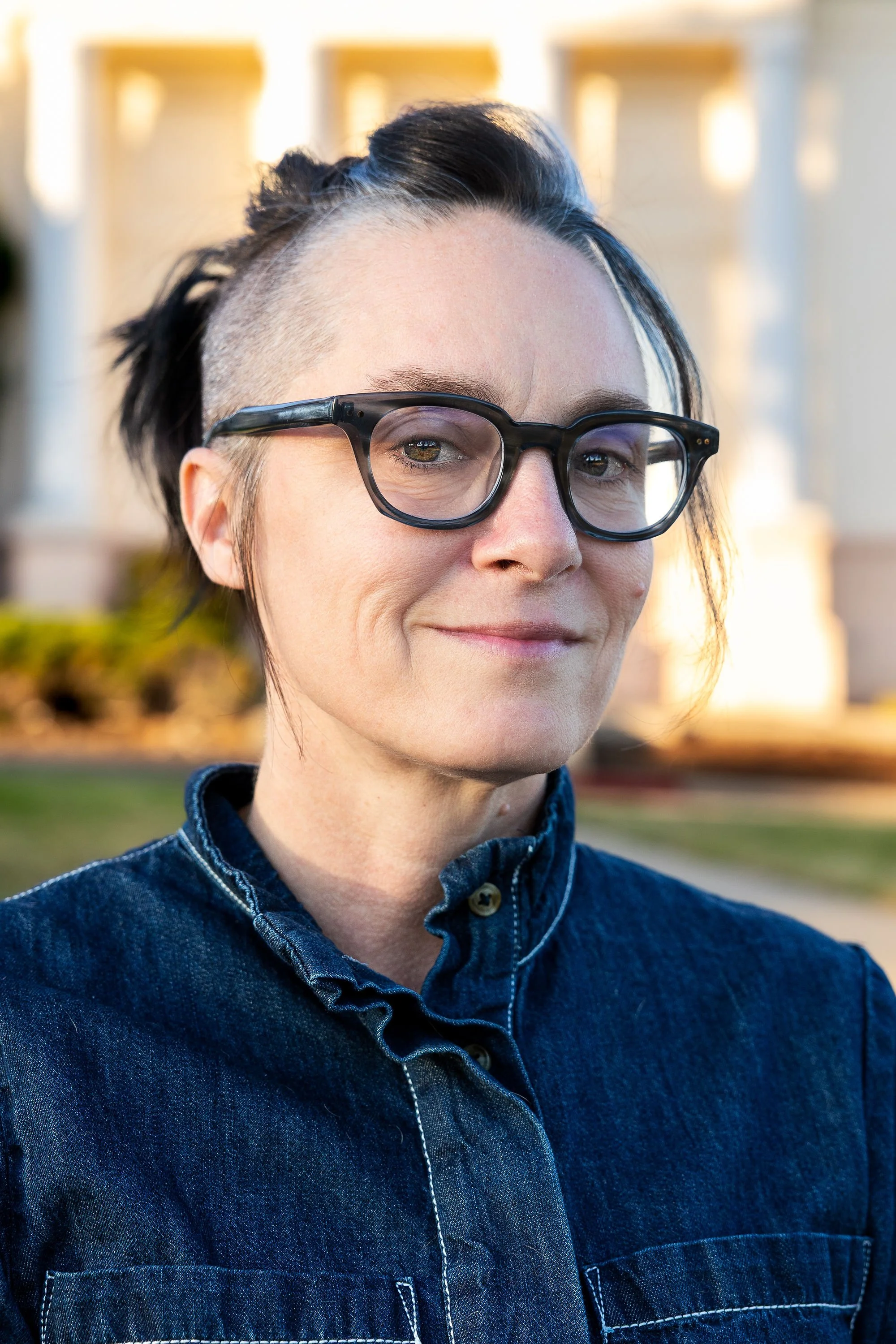
I'm Jen Leland, a Gen X Licensed Marriage and Family Therapist with an office in Berkeley, California.
I came to psychotherapy because I've always been interested in the complexity of being human: the stories we inherit, the ways systems shape our health and healing, how we learn to belong, the strategies we develop to survive, and the surprising ways we can change when we have enough safety, curiosity, and relationship to do so. I don't see my role as an expert who stands outside your experience and tells you what to do.
I'm interested in what happens when we become curious together and you feel less alone in the places that hurt the most.
That means I will listen closely to what you say, but also to what may be happening underneath it. We might pay attention to the parts of you that want different things, the patterns that keep repeating in your relationships, the places where you feel stuck or divided, or the ways your history continues to shape your present.
Sometimes the work involves understanding what happened to you.
Sometimes it involves grieving what didn't happen.
Sometimes it means discovering that a way of being that once protected you is no longer serving the life you want to live.
And sometimes the work is simply creating enough space to hear yourself more clearly.
I don't believe you need to be fixed.
I believe that most of us have very good reasons for becoming who we became.
Our families, cultures, communities, relationships, identities, histories, and social worlds all shape us. So do the things we've survived.
I don't want to reduce those experiences to symptoms or ask you to locate every difficulty solely within yourself.
Instead, I'm interested in helping you develop a deeper relationship with yourself—with more curiosity, compassion, agency, and choice.
This is part of what I mean by transformative and liberatory healing.
For me, liberation is not about becoming untouched by difficulty. It is about having more freedom to decide how you want to live, what you want to carry forward, what you want to let go of, and who you want to become and how you want to be in relationship to your peoples and communities.
What I bring into the room
My style is warm, curious, direct, and relational. I laugh often with my clients.
I can sit with complexity and uncertainty. I don't need your experience to fit neatly into a category before we can work with it.
I also won't assume that insight is the same thing as change.
You may understand exactly why you do something and still find yourself doing it.
The deeper work is often about creating a different experience—not simply acquiring another explanation or framework.
My approach draws from relational psychotherapy, Internal Family Systems, trauma-informed practice, and an understanding of healing that takes social and cultural context seriously.
I bring these perspectives into the room as possibilities rather than prescriptions. Your experience remains the center of the work.
A particular interest in the places that don't fit neatly
Over the years, I've developed particular experience working with people navigating trauma, grief, identity and belonging, moral injury, high-control groups and cult recovery, relational challenges, psychedelic experiences, and major life transitions.
I am especially interested in working with people whose experiences don't fit easily into conventional narratives of mental health. If you have been harmed in the mental health field, I have too and understand deeply the courage it takes to heal under those conditions.
People who have questions that don't have simple answers.
People who have already done a lot of self-reflection and are ready to go somewhere deeper.
People who are questioning inherited beliefs, identities, relationships, or ways of living.
People who are changing—and don't necessarily want to go back to who they were before.
My training and experience
I am a Gen X Licensed Marriage and Family Therapist in California and have been working in the field for more than 20 years.
My clinical work has been shaped by training and experience in community mental health, crisis care and recovery, psychodynamic and liberation psychology, including Internal Family Systems and trauma-informed and relational approaches.
I have also provided clinical supervision for more than 15 years, supporting therapists as they develop their own clinical voices and ways of being in the room.
I do my own work and participate in weekly consultation groups and supervision.
Recent certifications include:
IFS Institute graduate, level one graduate; 2026
CIIS Certified Psychedelic Therapy and Research program; 2018
Cult recovery, high control group therapy; 2020
My professional experience matters, but so does the way I show up with another human being. I continue to learn from my clients, from colleagues, from my own ongoing growth, and from the communities and traditions that have shaped how I understand healing.
A little more personally
Outside of the therapy room, I am playing and exploring with my chosen kin, raising up a furry baby, exploring new queerpunk, goth, new wave, and ethereal music and appreciating the templates set in the 80’s.
I believe that a meaningful life includes both depth and ordinary pleasure: talking with plants and birds, practicing psychogeography, dropping into comptemplative, activist, and creative practices with comrades and co-conspirators.
I share these things not because you need to know everything about me before beginning therapy, but because I want you to have a sense of the person you might be sitting across from.
Choosing a therapist is an intimate decision.
You deserve to know not only what someone is trained to do, but something about how they see the world and how they might meet you.
If you're wondering whether we might be a good fit
You don't need to know exactly what you need before reaching out.
We can start with a conversation.
I offer a free 20-minute consultation where you can tell me a little about what brings you to therapy, ask questions, and get a sense of how I work.
There doesn't need to be a perfect explanation.
You can simply begin where you are.